Sulfur Content Specifically Controlled in Stainless Steel Valves and Fittings for Liquid-Cooled Data Centers
Why Is Sulfur Content Specifically Controlled in Stainless Steel Valves and Fittings for Liquid-Cooled Data Centers?
Large quantities of stainless steel valves and fittings are used throughout the coolant circulation pipelines of liquid-cooled data center systems. Thanks to their corrosion resistance, cleanliness, mechanical strength, and long service life, stainless steel components have become an important part of cooling distribution units, manifolds, main pipelines, branch lines, and other liquid-cooling infrastructure.
However, stainless steel valves and fittings used in liquid-cooled data center projects are often subject to a specific sulfur-content requirement. In many projects, the sulfur content of the stainless steel is required to be controlled within the range of:
S = 0.005%–0.030%
This requirement is not intended to improve cooling performance, nor does sulfur itself improve the corrosion resistance of stainless steel.
The main purpose is to ensure stable and repeatable automatic welding performance for stainless steel pipelines, manifolds, and prefabricated piping assemblies.
This is particularly important when autogenous orbital GTAW, also known as automatic orbital TIG welding without filler metal, is used. In this welding process, sulfur content can significantly affect weld-pool flow, weld penetration, bead geometry, and welding consistency.
Liquid-cooling systems for data centers, including cooling distribution units, in-rack manifolds, main pipelines, branch pipelines, and precision thin-wall tubing, require a large number of highly consistent welded connections with an extremely low risk of leakage. For this reason, automatic orbital welding is increasingly used in the fabrication and installation of these systems.
1. Sulfur Content Affects Weld Penetration
Sulfur is a surface-active element in the molten weld pool of stainless steel.
It can change the relationship between surface tension and temperature in the molten metal, thereby changing the direction of fluid movement inside the weld pool. This phenomenon is known as the Marangoni effect.
When Sulfur Content Is Too Low
When sulfur content falls below approximately 0.005%, the following conditions may occur:
Molten metal tends to flow outward from the center of the weld pool.
Welding heat spreads toward both sides of the joint.
The weld bead becomes wider and shallower.
Insufficient root penetration or localized lack of fusion may occur.
The same welding program may produce different results on materials from different heats.
According to orbital welding literature, when the sulfur content of 316L stainless steel is below approximately 0.005%, achieving sufficient penetration becomes more difficult.
The external weld-bead width may increase by approximately 50%, and in some cases the welding heat input may need to be increased by approximately 40% to achieve the same level of penetration. These effects have been discussed in technical materials published by Swagelok and other orbital welding specialists.
When Sulfur Content Is Properly Controlled
When sulfur content is maintained within an appropriate range:
Molten metal tends to flow toward the center of the weld pool.
Welding heat becomes more concentrated at the weld center and root.
The weld bead becomes narrower and deeper.
Full penetration in a single pass is easier to achieve.
Automatic welding programs become more repeatable.
Experimental studies have also shown that weld penetration in austenitic stainless steel generally increases as sulfur content rises within a suitable range. The main reason is that sulfur changes the direction and intensity of Marangoni convection inside the weld pool.
The effect can be summarized as follows:
Sulfur Condition
Weld-Pool Flow
Typical Weld Shape
Main Risk
Below 0.005%
Outward from the center
Wide and shallow
Incomplete penetration and unstable welding parameters
Properly controlled
Toward the center
Narrow and deep
Easier and more stable full penetration
Excessively high
Increased penetration but more inclusions
Potentially deep but less stable
Hot cracking, inclusions, and reduced corrosion resistance
2. Why Is the Lower Limit Usually Set at 0.005%?
A sulfur content of 0.005% is equivalent to 50 ppm.
The main purpose of this lower limit is to prevent the material from entering an ultra-low-sulfur range. Contrary to a common assumption, lower sulfur does not always mean better weldability.
This distinction is important:
From the perspective of material purity and corrosion resistance, lower sulfur is generally considered beneficial.
From the perspective of autogenous orbital welding, excessively low sulfur may make it more difficult to achieve sufficient weld penetration.
Therefore, when a customer specifies a minimum sulfur content of 0.005%, the likely objective is to ensure that tubing, fittings, valves, and other weld-end components can be welded using a stable and standardized orbital welding program.
Without this lower limit, welding current, pulse settings, travel speed, and other parameters may need to be adjusted whenever materials from different heats are introduced.
3. Why Is the Upper Limit Set at 0.030%?
Two separate issues must be distinguished.
3.1 The 0.030% Value Is Commonly the Maximum Allowed by Material Standards
Under ASTM material specifications, the maximum sulfur content for many commonly used grades, including TP304, TP304L, TP316, and TP316L, is typically 0.030%.
Therefore, when a customer specifies:
S = 0.005%–0.030%
the requirement may mean:
Sulfur must not be below 0.005%, in order to avoid orbital welding difficulties caused by ultra-low sulfur.
Sulfur must not exceed the normal maximum limit of 0.030% for 304L or 316L stainless steel.
3.2 A 0.030% Upper Limit Is Not Necessarily the Optimum Limit for Orbital Welding
For highly controlled autogenous orbital welding applications, some engineering guidelines recommend that:
Sulfur content should preferably remain below approximately 0.017%.
The sulfur-content difference between two components being welded should preferably not exceed approximately 0.007%.
When the sulfur-content difference exceeds approximately 0.010%, the weld pool may shift toward the lower-sulfur material, potentially causing localized incomplete penetration.
Therefore, from a welding-process-control perspective, the range of 0.005%–0.030% is relatively broad.
It does not mean that all materials within this range will provide identical orbital welding performance.
For example:
Stainless steel tubing has a sulfur content of 0.006%.
A stainless steel fitting has a sulfur content of 0.028%.
Both components comply individually with the specified range of 0.005%–0.030%. However, their sulfur-content difference is 0.022%.
When these two components are joined by autogenous orbital welding, the sulfur mismatch may cause asymmetric weld-pool movement, localized insufficient penetration, or inconsistent root-bead formation.
This is a critical issue for manufacturers of stainless steel valves, fittings, manifolds, and prefabricated piping assemblies.
4. Higher Sulfur Is Not Always Better
Although increasing sulfur content within a controlled range can improve weld penetration, higher sulfur content also has disadvantages.
Sulfur can combine with manganese to form manganese sulfide inclusions. Excessive sulfur may result in:
Increased MnS and other sulfide inclusions.
A higher risk of weld solidification cracking.
Reduced surface cleanliness and smoothness.
More initiation points for localized corrosion.
Greater difficulty in achieving a clean, high-purity internal weld surface.
Research associated with the U.S. Department of Energy has indicated that sulfur may increase weld penetration, but low-melting-point sulfide phases can also increase the risk of grain-boundary solidification cracking.
The sulfur requirement is therefore a balance:
Sulfur must not be too low, otherwise stable full penetration may be difficult to achieve.
Sulfur must not be too high, otherwise inclusions, hot cracking, surface-quality problems, and corrosion risks may increase.
5. Why Is This Issue Particularly Important for Liquid-Cooled Data Centers?
Liquid-cooling pipelines in data centers are different from ordinary building water systems or conventional industrial piping.
Several characteristics make weld quality especially important.
5.1 Coolant Leakage Can Have Serious Consequences
A minor leak in an ordinary industrial pipeline may primarily result in maintenance work or production interruption.
However, a leak near a server rack, cooling distribution unit, manifold, GPU system, or electrical component may directly affect computing equipment and data center operation.
Welded joints must therefore provide:
Full penetration.
No incomplete fusion.
No significant internal oxidation.
High repeatability.
Full traceability.
5.2 Extensive Use of Thin-Wall Tubing and Compact Manifolds
Liquid-cooling systems have limited installation space and often contain large numbers of customized pipelines, branch connections, compact manifolds, and small welded assemblies.
Automatic orbital welding can provide stable weld geometry and controlled heat input, including in compact or difficult-to-access locations.
5.3 Large Production Volumes Require Standardized Welding Parameters
A single liquid-cooling project may require hundreds, thousands, or even more identical valves, fittings, spool pieces, and manifold components.
Customers and system integrators do not want to readjust welding parameters every time a new stainless steel heat is introduced.
Controlling both the sulfur-content range and the sulfur-content difference between mating components can improve:
Compatibility with standardized welding programs.
Batch-to-batch production consistency.
First-pass welding acceptance rates.
Welding procedure qualification.
Quality control and material traceability.
6. Practical Implications for Stainless Steel Valve and Fitting Manufacturers
Factories should not interpret the requirement simply as:
The sulfur value shown on the material certificate is between 0.005% and 0.030%, so the material is acceptable.
Several additional factors need to be controlled.
6.1 Confirm Whether Sulfur Matching Is Required
Manufacturers should clarify the following requirements with the customer:
What is the maximum permitted sulfur-content difference between the tubing and fittings?
Must all components to be welded come from heats with similar sulfur levels?
Does the sulfur requirement apply only to each individual base material, or must mating components also be sulfur matched?
Will the final components be joined using autogenous orbital welding, robotic TIG welding, or manual welding with filler metal?
When autogenous orbital welding is used, the sulfur-content difference between two mating components may be more important than whether each individual component simply falls within the broad range of 0.005%–0.030%.
6.2 Consider a Narrower Internal Control Target
For long-term, high-volume production, manufacturers may consider adopting a narrower internal purchasing and production target, such as:
S = 0.008%–0.017%
This is only a practical engineering-control approach. It should not replace the customer’s technical specification.
The final acceptable range should be determined according to the customer’s welding procedure qualification, project specifications, and actual welding trials.
6.3 Manage Materials by Heat Number
Manufacturers should record and control:
Stainless steel grade.
Heat number.
Actual sulfur content.
Production batch.
The tubing, fitting, valve, manifold, or assembly with which the component will be welded.
Products from different heats should not be mixed together without control simply because they are all marked as 304L or 316L.
6.4 Do Not Rely on Standard Handheld XRF for Low-Level Sulfur Testing
Handheld XRF analyzers are useful for identifying 304, 316, and other stainless steel grades by measuring major alloying elements.
However, standard handheld XRF equipment generally cannot reliably measure low concentrations of sulfur and phosphorus in stainless steel.
Technical information from Thermo Fisher and other material-analysis specialists indicates that handheld XRF is not suitable for accurately verifying low sulfur and phosphorus levels in stainless steel.
For sulfur-content verification, more appropriate methods include:
Mill material test reports showing the actual sulfur value.
Spark optical emission spectroscopy, or spark OES.
Laboratory combustion analysis using a carbon-sulfur analyzer.
Manufacturers should therefore:
Require the steel mill’s MTR to state the actual sulfur content.
Use spark OES for verification when necessary.
Use laboratory combustion testing for disputed or critical batches.
Avoid using handheld XRF results alone as proof that the material meets the 0.005% minimum sulfur requirement.
Conclusion
The requirement to control sulfur content between 0.005% and 0.030% in stainless steel valves and fittings for liquid-cooled data centers is mainly related to welding performance rather than cooling efficiency.
Proper sulfur control helps manufacturers and system integrators achieve:
Stable orbital welding penetration.
Consistent weld geometry.
Higher first-pass acceptance rates.
Reduced leakage risk.
Better batch-to-batch repeatability.
Improved material and welding traceability.
However, compliance with the specified range alone may not be sufficient.
For autogenous orbital welding applications, sulfur matching between mating components, heat-number management, reliable sulfur testing, and actual welding qualification are also essential.
About SANSUN
SANSUN Fluid Equipment Co., Ltd. has more than 15 years of experience in manufacturing sanitary stainless steel valves, fittings, and fluid-handling equipment.
Our products are widely used in the food, beverage, pharmaceutical, biotechnology, and other hygienic-processing industries.
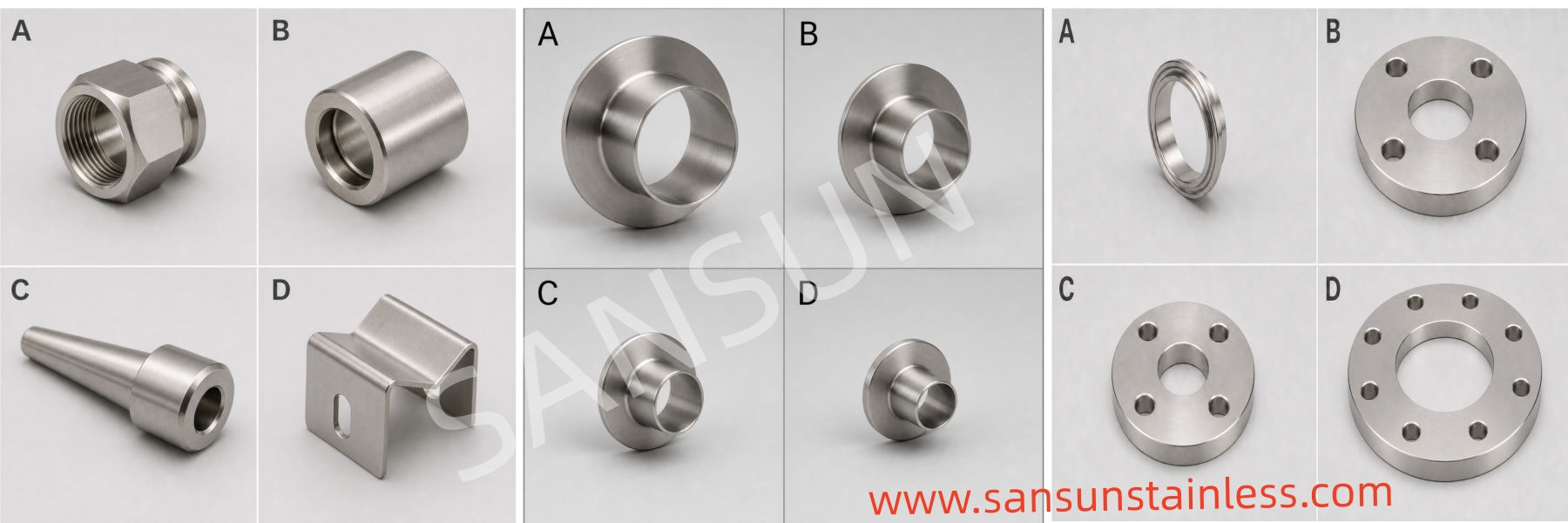
In recent years, SANSUN has also manufactured large quantities of stainless steel valves and fittings for liquid-cooled data center projects, including products manufactured with specially controlled sulfur content according to customer and project requirements.
For inquiries about stainless steel valves, fittings, manifolds, and customized components for liquid-cooling systems, please contact us:
In the food, dairy, and beverage industries, choosing the right valve is not just about controlling flow—it is about protecting your product integrity and optimizing your production time.
One of the most common questions we get from factory engineers and procurement managers is: “Is it really worth upgrading from a standard Single Seat Valve to a Sanitary Mixproof Valve?”
The price difference is noticeable, but so is the performance difference. While single seat valves are cost-effective for simple tasks, they come with limitations that can cost you more in the long run.
In this guide, we break down the technical differences, safety factors, and ROI (Return on Investment) of both valve types to help you make the best decision for your processing line.
What is a Sanitary Single Seat Valve?
A Sanitary Single Seat Valve is the workhorse of the hygienic processing industry. It is a simple shut-off or change-over valve with one seat sealing the plug against the body.
How it works: A single seat valve uses a single seal to separate the liquid in the pipeline. When the valve is closed, the seal prevents flow.
Pros:
Low Cost: Simple construction makes it affordable.
Easy Maintenance: Fewer moving parts mean it is easy to service.
Compact: Takes up less space in the piping system.
The Risk: The main limitation is that there is only one barrier between different fluids. If the seal fails due to wear or pressure spikes, the fluid in line A can mix with the fluid in line B. For this reason, you generally cannot clean one line while the other is running product—you risk cleaning chemicals mixing with your beverage or milk.
What is a Sanitary Mixproof Valve?
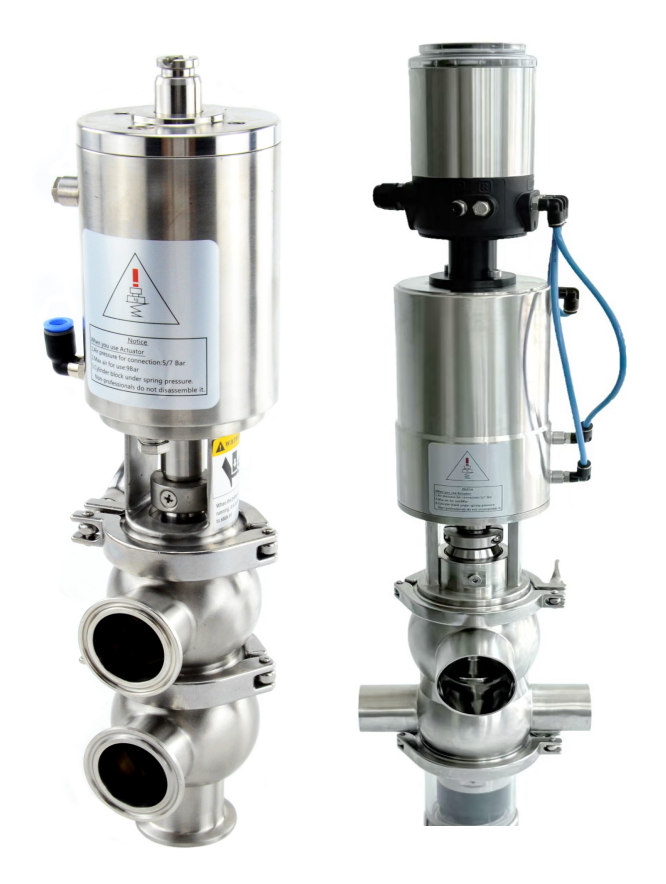
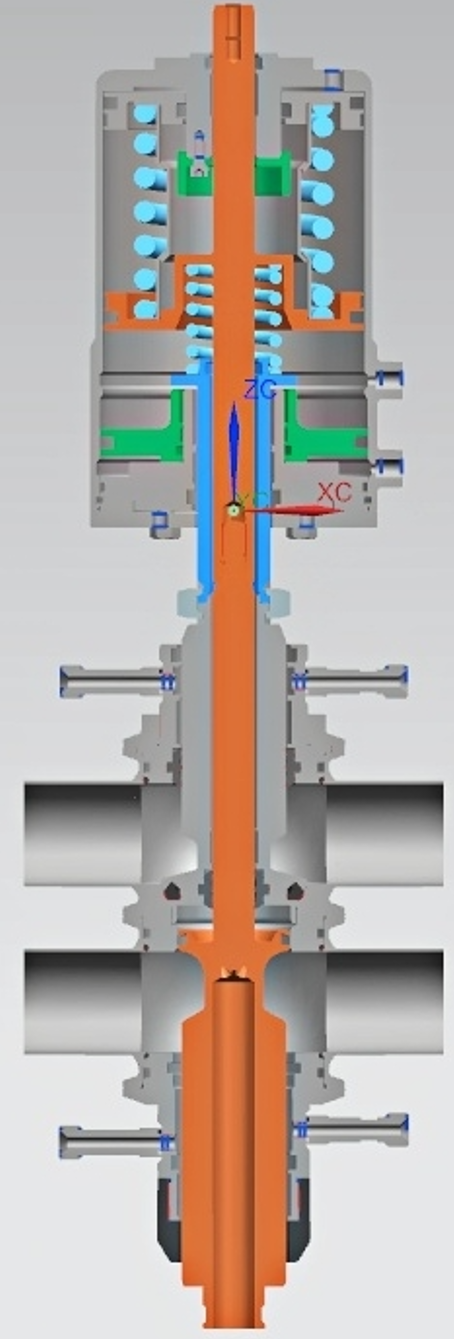
A Sanitary Mixproof Valve (often called a Double Seat Valve) is an advanced solution designed to separate two different products flowing through the same valve housing without any risk of cross-contamination.
How it works: Unlike the single seat valve, the mixproof valve has two independent seats and a leakage chamber in between them.
Sectional view of the double seat mixproof valve
If a seal fails, the leaked liquid does not cross into the other pipe. Instead, it is directed into the atmospheric leakage chamber and drains out of the bottom of the valve. This gives the operator immediate visual indication of a leak, while the two fluids remain 100% separated.
Key Comparisons: Why Upgrade to Mixproof?
When deciding between the two, consider these three critical factors:
1. Safety & Cross-Contamination
Single Seat: Offers minimal protection. It relies entirely on the integrity of a single seal.
Mixproof: Offers maximum protection. The “Double Seat + Leakage Chamber” design creates a physical barrier. For high-value industries like pharmaceuticals or dairy, where a single batch contamination can cost thousands of dollars, this safety feature is non-negotiable.
2. Process Efficiency (The Game Changer)
This is where the Mixproof valve pays for itself.
With Single Seat Valves, you typically have to shut down a large section of your plant to perform CIP (Clean-in-Place) to avoid chemical contamination.
With Mixproof Valves, you can achieve Simultaneous Processing. You can run milk through the upper housing while running hot CIP fluid through the lower housing. This allows for 24/7 continuous production, significantly increasing your factory’s output capacity.
3. Valve Manifolds & Automation
Mixproof valves are the building blocks of modern Valve Matrices (Manifolds). Because they handle complex flow paths safely, you can automate your entire routing system, reducing manual hose connections and human error.
The Verdict: Which One Should You Choose?
Stick with a Single Seat Valve if:
You have a limited budget.
You are controlling simple flows (e.g., water or utilities).
Your production schedule allows for downtime to clean the entire system safely.
Cross-contamination risks are low or manageable.
Upgrade to a Sanitary Mixproof Valve if:
You are producing high-value products (Dairy, Brewery, Pharma, Cosmetics).
Efficiency is critical: You need to clean one tank while filling another.
You want to eliminate the risk of product recall due to contamination.
You are building an automated valve manifold.
Conclusion
While the initial investment for a sanitary mixproof valve is higher, the ability to run continuous production and the peace of mind regarding product safety often results in a higher ROI within the first year of operation.
At Sansun Stainless, we specialize in manufacturing high-quality sanitary valves that meet strict international standards. Whether you need a cost-effective single seat solution or a state-of-the-art mixproof matrix, we have the engineering expertise to support you.
Ready to upgrade your piping system? [Contact Us Today] to get a quote or discuss your technical requirements with our engineering team.
Born for Cleanliness: The “Anti-Mixing Hero” in Dairy Production
— SANSUN Double Seat Mixproof Valve Shines on a Milk Processing Line
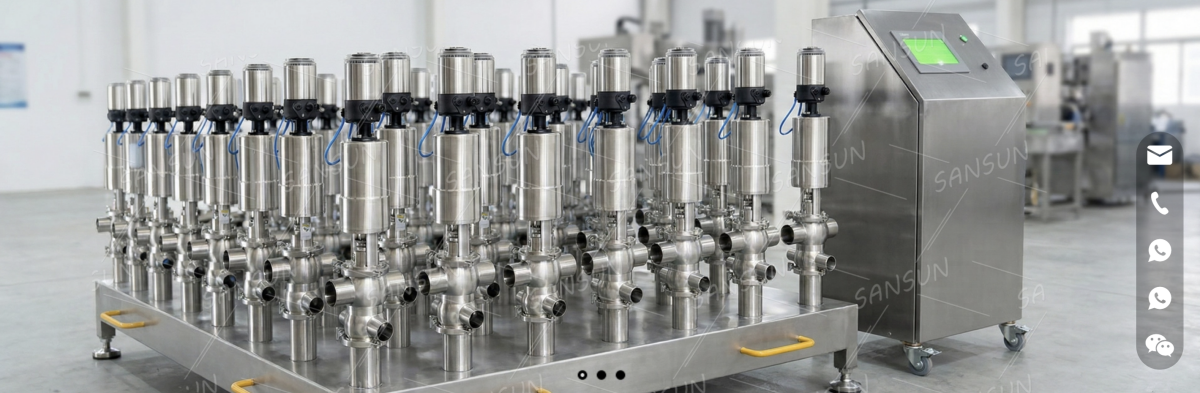
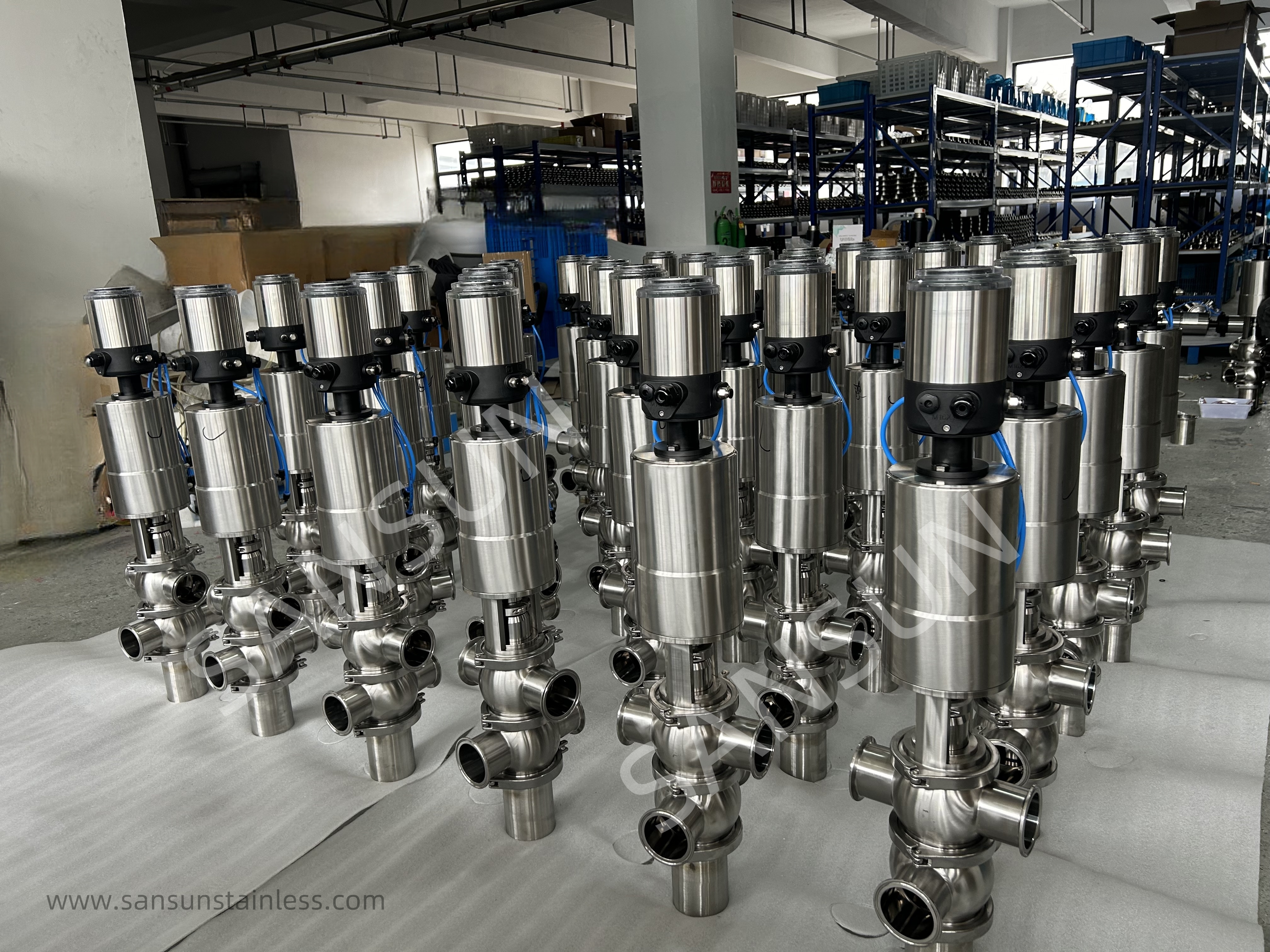
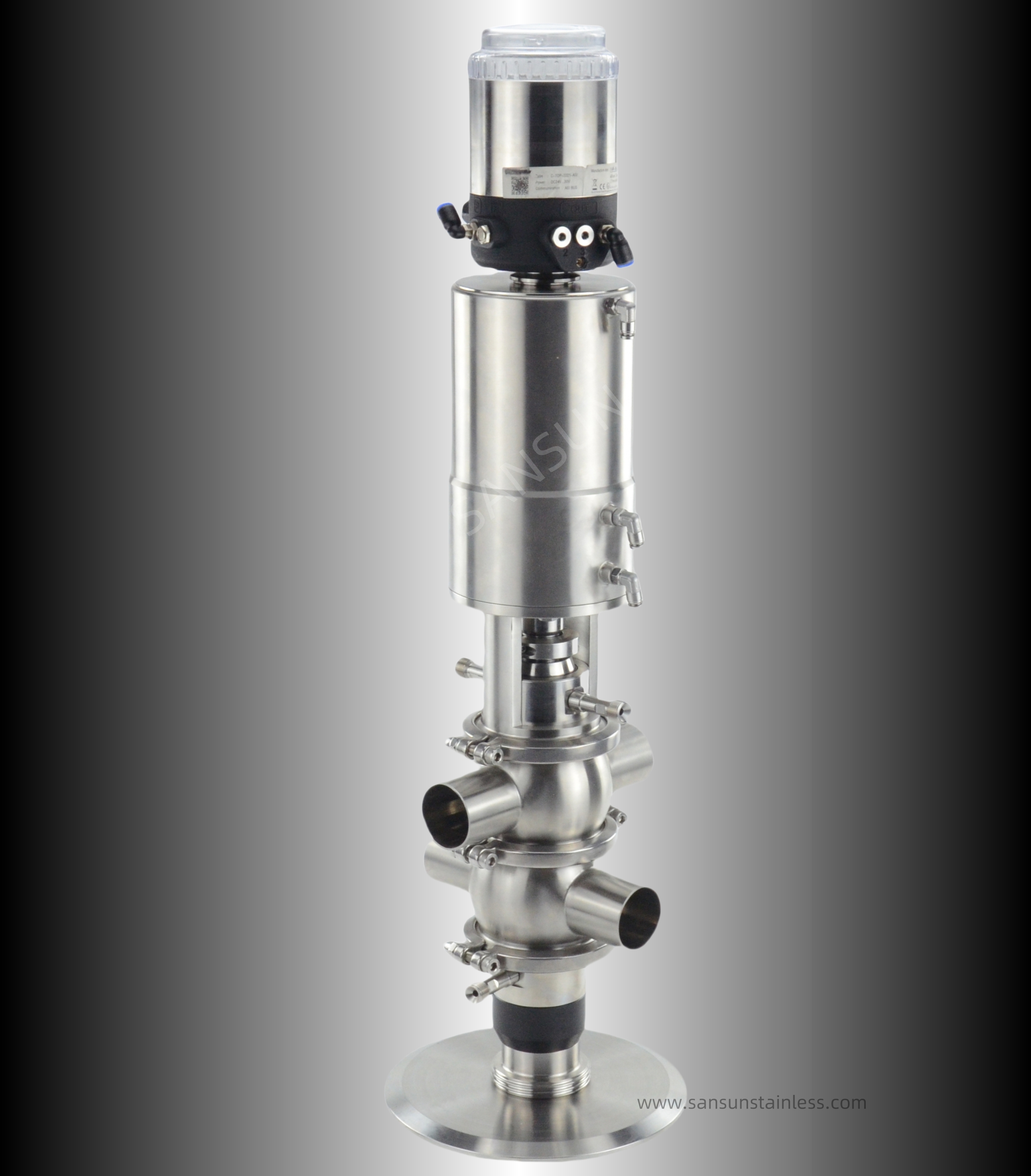
In modern dairy processing, food safety, efficient fluid switching, and intelligent automation are key indicators of a high-performance production line. Recently, a batch of Double Seat Mixproof Valves with ASI Communication Top Control Units from SANSUN successfully passed factory testing and are ready for delivery. These valves will serve as a critical component in a major international milk production line.
This shipment not only reflects our manufacturing excellence but also demonstrates the trust placed in SANSUN by the food industry for hygienic control and advanced automation.
Why Do Dairy Companies Choose SANSUN Mixproof Valves?
✅ Absolute Cross-Contamination Prevention
In milk processing, strict fluid separation is required during CIP cleaning, pasteurization, fermentation, and product transfer. SANSUN mixproof valves utilize a double-seat design with an independent leakage chamber to effectively eliminate any risk of cross-contamination, ensuring food safety at every step.
✅ ASI Smart Control Top Unit
Each valve is equipped with an ASI communication control head, enabling real-time digital monitoring. Whether integrated with PLC or operated remotely, the system offers precise status tracking, faster commissioning, and efficient maintenance.
✅ Hygienic Design to Meet Global Standards
Constructed from high-grade stainless steel and polished to mirror finish, the valves are free of dead angles and bacteria traps. Fully compliant with 3A and EHEDG standards, they are ideal for handling milk, fermented liquids, CIP agents, and more.
Project Highlights
Client: Global Dairy Processing Group
Application: Fluid switching & CIP isolation on milk lines
️ Quantity: Nearly 100 units, 100% tested and assembled
⏱️ Delivery Time: Completed within 3 weeks, on time and accurate
Engineered for Hygienic Excellence
In dairy factories, SANSUN’s mixproof valves serve not just as mechanical components, but as intelligent flow protectors. They ensure that every drop of milk flows with safety, and every process line runs with confidence.
Let’s Talk About Clean Valve Solutions
Looking for a reliable, hygienic, safe, and automation-friendly valve system for your dairy or beverage processing? We’re ready to support you with customized solutions and technical consultation.
Double Seat Mixproof Design to Prevent Cross Contamination
Two independent sealing seats with a leakage chamber in between ensure 100% physical separation of different fluids, effectively preventing cross contamination.
ASi Communication Control Head (Automation Ready)
Highly compatible with PLC and SCADA systems, enabling simplified wiring, rapid deployment, and remote diagnostics — an ideal choice for implementing Industry 4.0 in the pharmaceutical and beverage industries.
Hygienic Design
Made from AISI 316L stainless steel with an internal surface finish of Ra ≤ 0.8μm, suitable for CIP/SIP cleaning. Designed in compliance with 3A / FDA standards
Modular Structure & High Scalability
Valve body, control head, and interfaces support various customizations to fit different systems (welded, clamp, threaded connections, etc.).
Long Service Life & Easy Maintenance
The pneumatic actuator has been tested for over a million cycles. Seals are easy to replace, and spare parts have high compatibility.
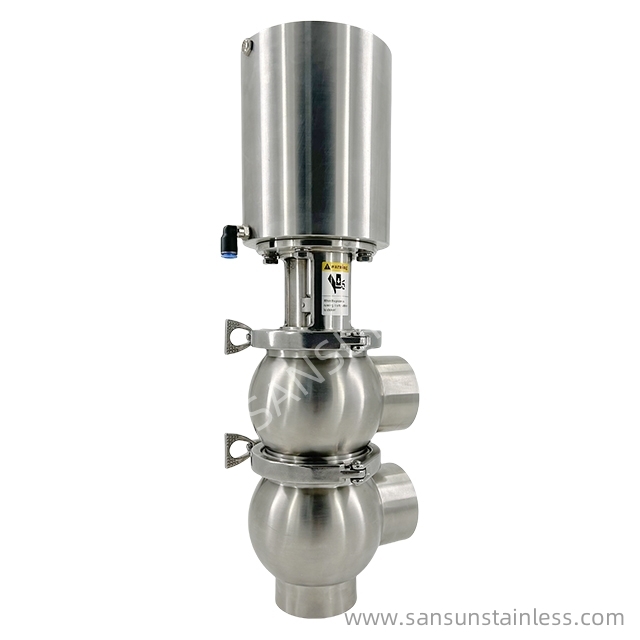
Single Seat Valve is one of the constructive types of control pipeline valves. This is the most commonly used type of control valve for both continuous (analog) and discrete control of flow and pressure. Single Seat Valve perform this task by changing the flow rate of the medium through their flow area. The material of manufacture of reversing valve depends directly on the type of working medium with which the valve will come into contact. In reversing valves, a plunger serves as a movable element, which can be needle, rod or poppet. The plunger moves perpendicular to the flow axis of the medium through the seat (or saddles), changing the flow area. The most common ones are double-seat valves, since their shutter is well balanced, which allows them to be used for continuous pressure regulation up to 6.3 MPa in pipelines with a diameter of up to 300 mm, while using actuators of lower power than single-seat ones. Single-seated valves are most commonly used for small bore diameters due to their unbalanced plug. Also, the advantage of two-seat valves is that with such a design it is much easier to ensure the tightness required for shut-off and control valves using a plunger that has a special regulating profile for contact with one seat, and for fitting into another seat – a sealing surface for tighter contact.
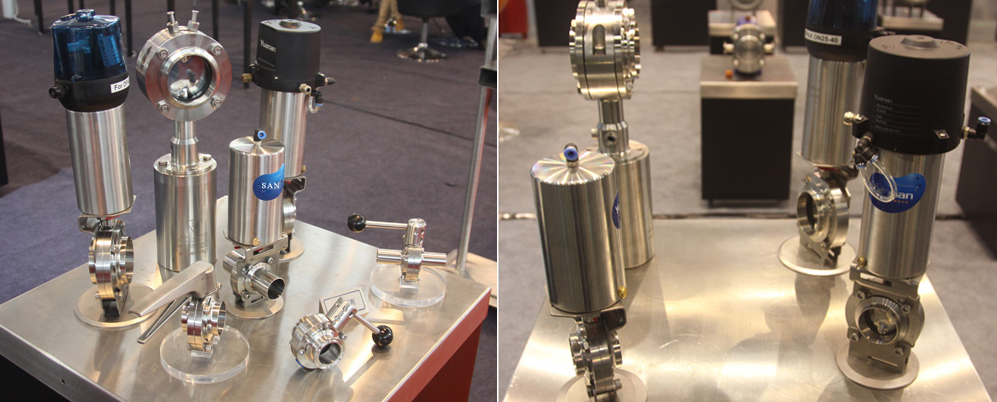
Pneumatic Shut-off Valve is a pneumatic actuated hygienic single seat valve. It is operated automatically by a single acting or double acting air actuator, our Pneumatic shut-off and divert valve is widely used for the application such as food processing industry, beverage production, pharmaceutical and fine chemical industries etc. Sansun offers full line sanitary valves to reduce your budget and improve your business well etc. Hygienic Reversing Valve/ Hygienic Single Seat Valve/Sanitary Reversing Valve/ Sanitary Single Seat Valve. SINGLE SEAT VALVE SHUT-OFF SINGLE SEAT VALVE DIVERT SINGLE SEAT VALVE TANK BOTTOM SINGLE SEAT VALVE OVERFLOW SINGLE SEAT VALVE
DIVERT SINGLE SEAT VALVE
single seat valve with ASI top headTANK BOTTOM SINGLE SEAT VALVETANK BOTTOM SINGLE SEAT VALVE 02DIVERT SINGLE SEAT VALVE
Divert Seat Valve is one of the constructive types of control pipeline valves. This is the most commonly used type of control valve for both continuous (analog) and discrete control of flow and pressure.
Divert Seat Valve perform this task by changing the flow rate of the medium through their flow area. The material of manufacture of reversing valve depends directly on the type of working medium with which the valve will come into contact. In reversing valves, a plunger serves as a movable element, which can be needle, rod or poppet. The plunger moves perpendicular to the flow axis of the medium through the seat (or saddles), changing the flow area.
The most common ones are double-seat valves, since their shutter is well balanced, which allows them to be used for continuous pressure regulation up to 6.3 MPa in pipelines with a diameter of up to 300 mm, while using actuators of lower power than single-seat ones. Single-seated valves are most commonly used for small bore diameters due to their unbalanced plug.
Also, the advantage of two-seat valves is that with such a design it is much easier to ensure the tightness required for shut-off and control valves using a plunger that has a special regulating profile for contact with one seat, and for fitting into another seat – a sealing surface for tighter contact.
Pneumatic Shut-off Valve is a pneumatic actuated hygienic single seat valve. It is operated automatically by a single acting or double acting air actuator, our Pneumatic shut-off and diverter valve is widely used for the application such as food processing industry, beverage production, pharmaceutical and fine chemical industries etc. Sansun offers full line sanitary valves to reduce your budget and improve your business well etc.
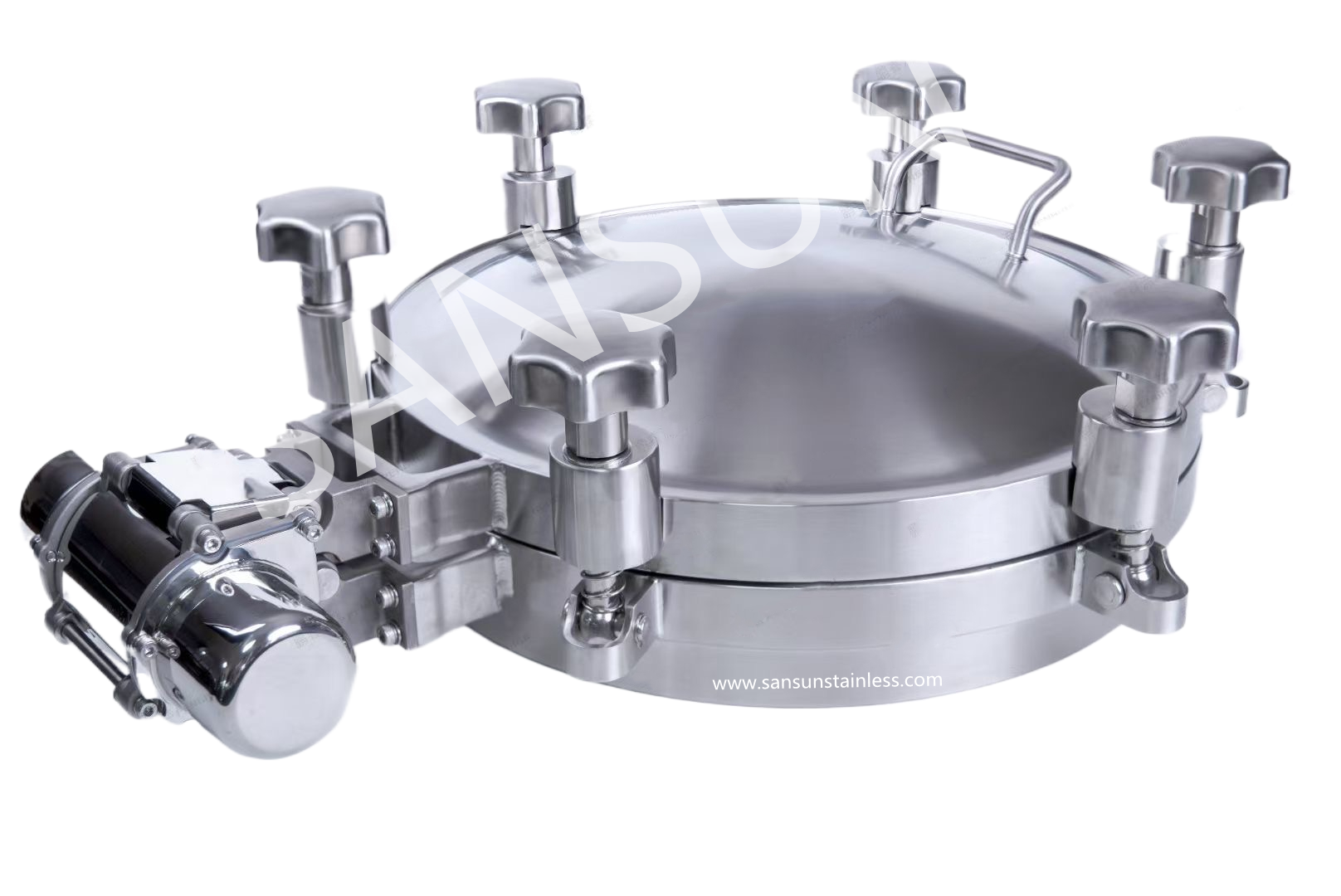
For large-sized stainless steel manways, the cover is quite heavy, making it very difficult for operators to handle.
After continuous research and experimentation, we have added a booster to the manway, allowing operators to easily open and close it. This can greatly improve work efficiency.
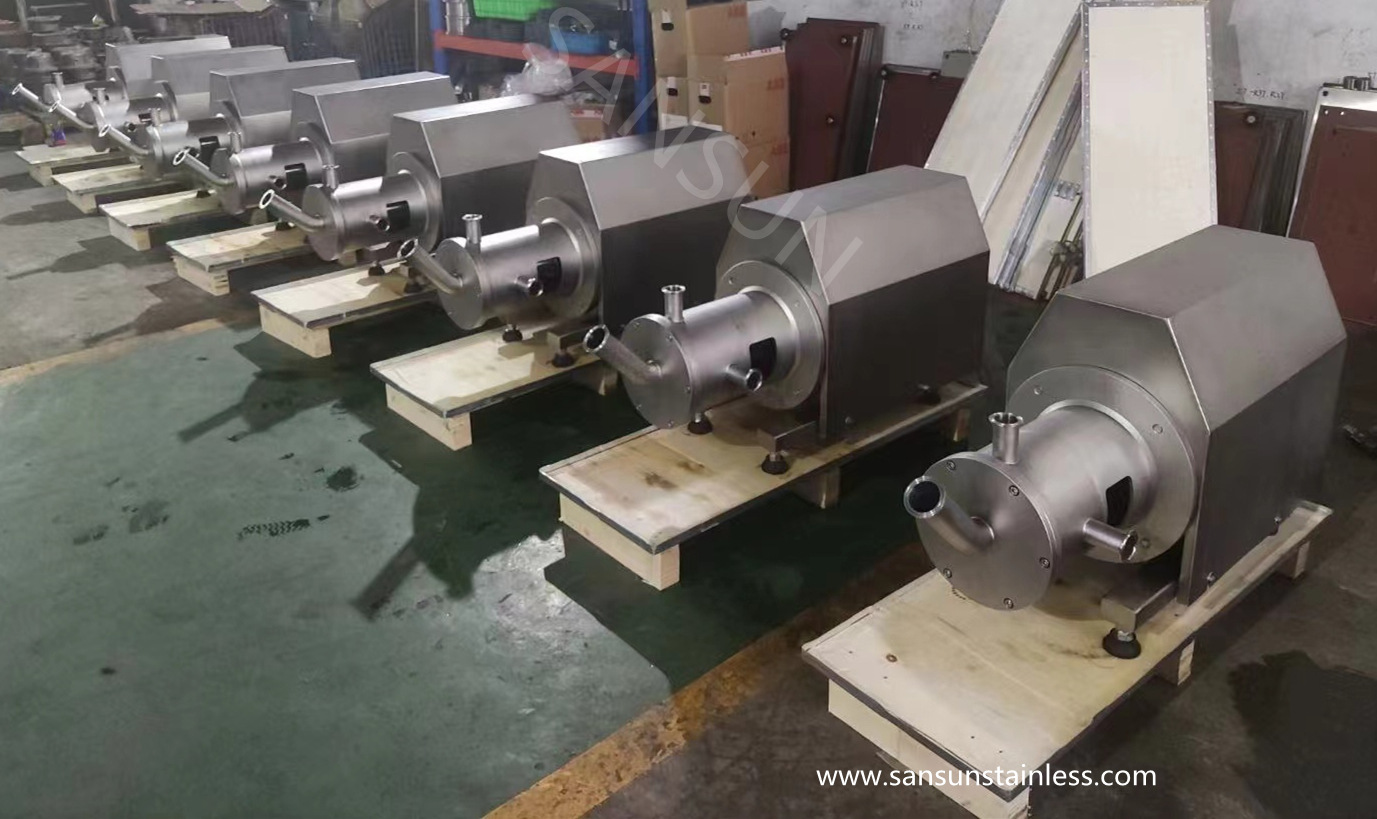
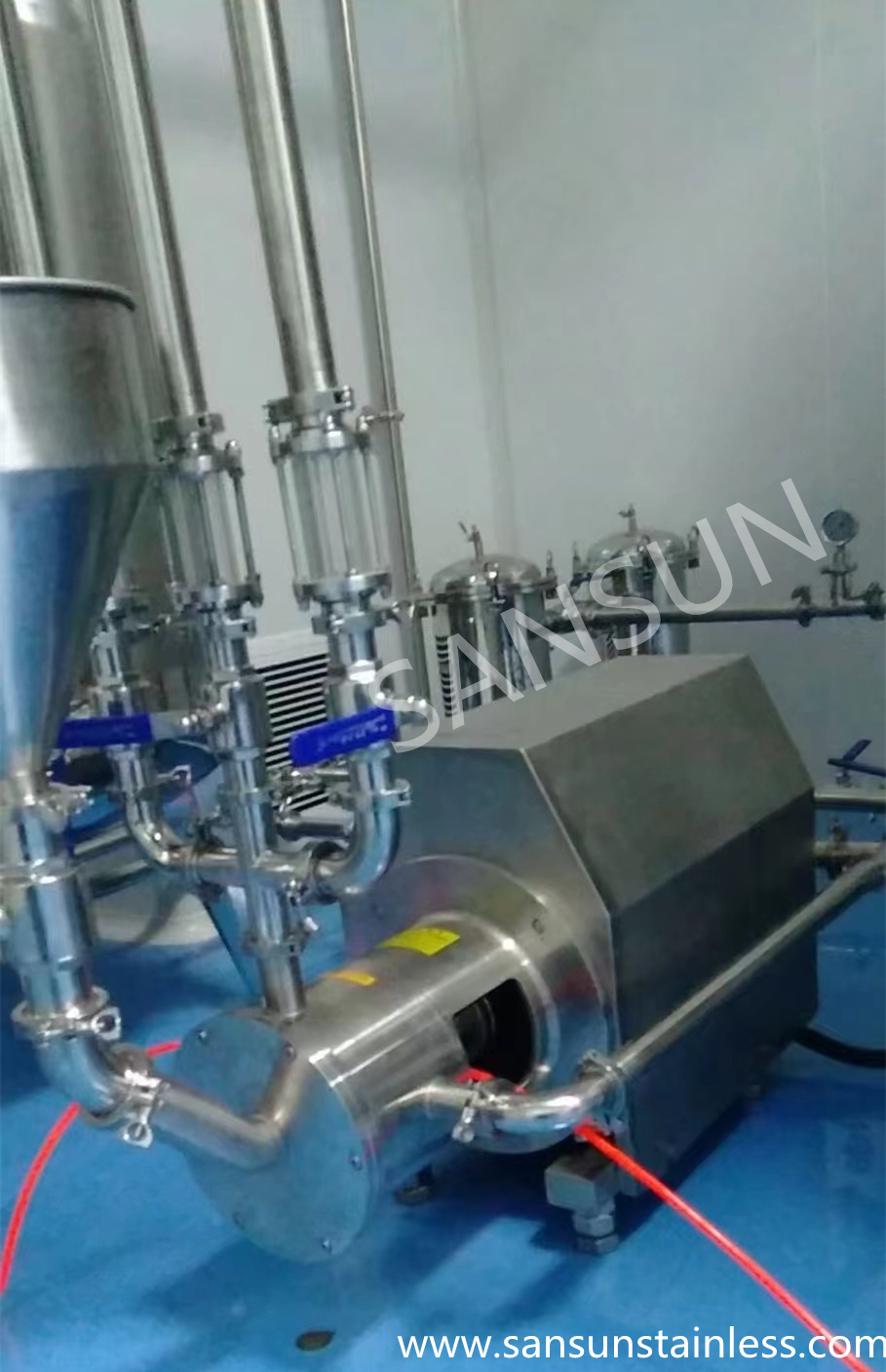
The stainless steel hygienic solid-liquid mixing pump is a specialized equipment designed for efficient mixing of powder-like solids with liquids. The system generates vacuum internally, allowing direct introduction of powder into the liquid flow. When powder and liquid enter the mixing chamber from different directions, the specific surface area increases sharply. Upon contact between the powder and liquid, the powder is completely wetted, preventing the formation of agglomerates. As there are no incompletely wetted powder particles, crust formation on the surface of the liquid flow, stirring shaft, and container wall is eliminated, resulting in further enhancement of product quality.
The stainless steel hygienic solid-liquid mixing pump features a material hopper for feeding, and a spacious platform that can accommodate more powdered materials, supporting rapid powder addition, feeding, wetting, and thorough, agglomerate-free dispersion mixing. The equipment adopts a modular structure, simplifying piping and process steps, and supporting the expansion of custom modules, suitable for large-scale powder dispersion.
Case Study: Application of Biobased Green Surfactants
Due to the tendency of glucose to form lumps after moisture absorption, it requires rapid dispersion mixing of powder and liquid. Therefore, choosing the stainless steel hygienic solid-liquid mixing pump enables rapid powder feeding, ensuring immediate and thorough wetting of glucose by the liquid followed by rapid dispersion.
In a real case scenario, 200-mesh glucose is fed through the solid-liquid mixing pump and rapidly dispersed into fatty alcohol ether at a working temperature ranging from 20 to 60°C, with a maximum flow rate of up to 40m³/h.
Sanitary Stainless Steel Ball Valve for grape wineSanitary Stainless Steel Ball Valve for grape wine 2
Sanitary Stainless Steel Ball Valve for distilled beverage。
Stainless Steel Ball Valve for grape wine-making industry
Sanitary Stainless Steel Ball Valve for hard liquor。 Sanitary ball valves are also called a hygienic ball valve which is opened by turning handles attached to balls inside the valves. The ball has a hole or port through the middle. When the port is in line with both ends of the valve, the flow will occur. When the valve is closed, the hole is perpendicular to the ends of the valve, and flow is blocked. A ball valve is durable and usually works to achieve perfect shutoff even after years of disuse.
sanitary ball valves are made of high-quality stainless steel, which can meet the special requirements of various media in the food and biopharmaceutical fields. The smooth, seamless, and automatic emptying of handicrafts is also very suitable for steam cleaning.
sanitary ball valve has many advantages such as removable connection, simple structure, and easy maintenance; sanitary ball valve rubber seals and valve plates are high-quality pieces to ensure the use of performance and service life;
sanitary ball valve can supply valve body and disc materials such as AISI 304 or AISI 316L, 304L and 316 materials according to your requests. This stainless steel hygienic ball valve is suitable for dairy, food, beer, beverage, pharmaceutical, cosmetics, and other industrial areas.